Analysis
When Should You Investigate a Spike?
The right answer is not always now.
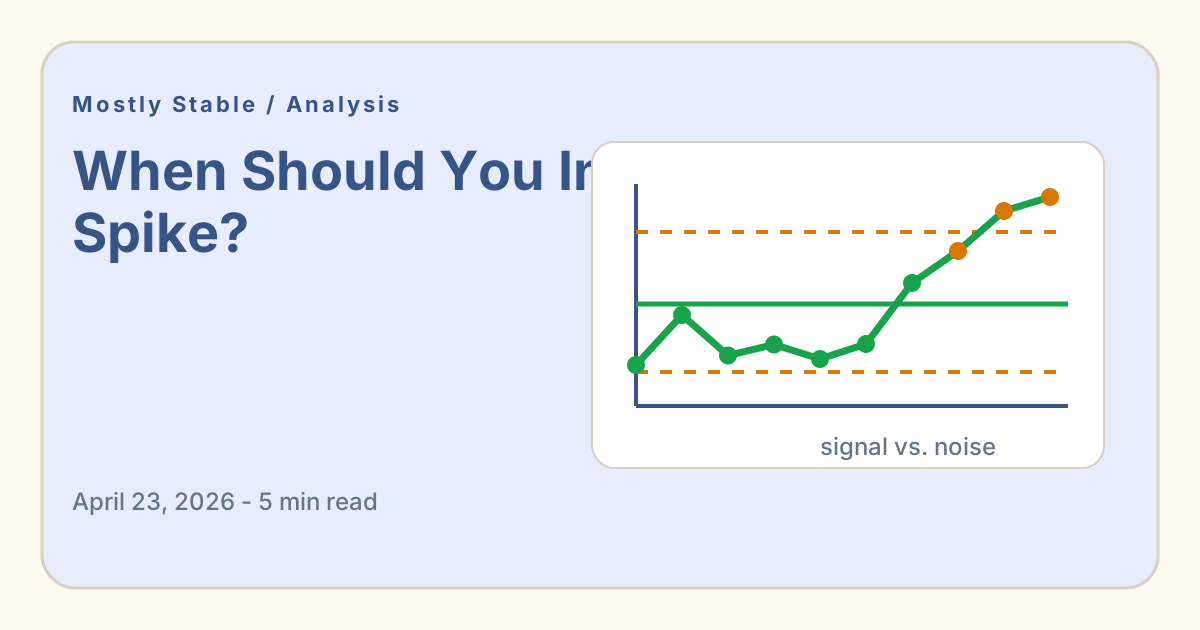
A spike is visually loud. It sticks out on a chart, makes people nervous, and tempts the room into immediate explanation. But a spike is not automatically a signal.
Some systems spike as part of normal behavior. Weekly demo requests may jump after a newsletter. Support tickets may rise after a billing cycle. Usage may surge on Mondays. If that kind of movement is normal for the process, investigating every spike will wear people down.
Use action rules
Process behavior charts give teams simple action rules. A point outside the expected limits is worth attention. A sustained pattern on one side of the average is worth attention. Points bouncing inside the limits usually are not, even if one of them looks dramatic.
The rule is not "never investigate inside the limits." Context can override the chart. If the metric is safety-critical, legally sensitive, or tied to a known incident, investigate. But for ordinary business metrics, the chart should slow down the reflex.
Ask better questions
When the chart shows routine variation, ask how to improve the system. When it shows a signal, ask what changed near that point. When it shows stable performance outside the target, ask whether the system is capable.
Those are three different questions. A spike without context tends to blur them together.
Write this into the operating rhythm
Decide ahead of time what counts as an investigation trigger. Then follow that rule when the room gets excited. The value of a process behavior chart is not just the math. It is the pause it creates before everyone starts chasing the loudest dot.