Leadership
A Weekly Exec Update That Does Not Create Fire Drills
The update should make the next decision easier, not create five new explanations.
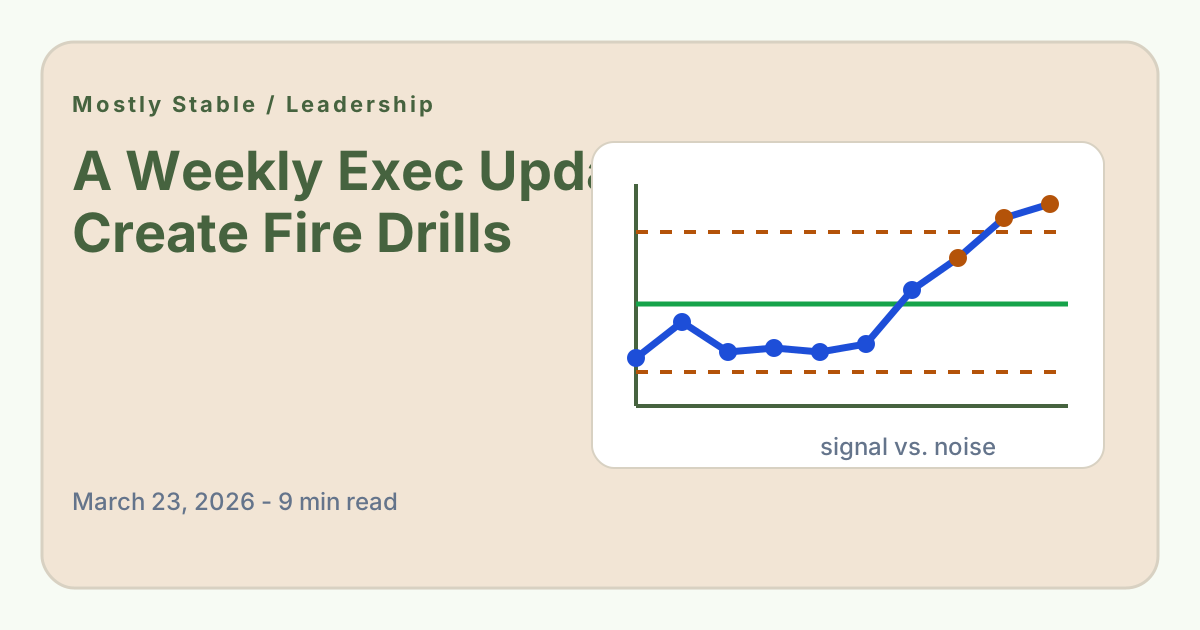
Executive updates have a habit of turning small movements into big feelings. A number goes red. A paragraph gets added. A follow-up gets assigned. By Friday, the team has spent more time explaining the update than using it.
A better weekly update separates status from interpretation.
The three-part format
- Signals: metrics that show evidence of a real system change.
- Capability gaps: metrics behaving predictably but not meeting the target.
- Watchlist: important metrics with no signal yet, but with context worth noting.
That structure keeps the exec team from treating every movement the same way. A signal needs investigation. A capability gap needs system improvement. A watchlist item needs attention, not drama.
Use charts as the evidence layer
Process behavior charts support the update because they show whether a metric is behaving inside or outside its expected range. The chart does not replace judgment. It disciplines judgment.
If churn is inside the normal range but above the business target, say that plainly. If activation breaks the lower limit after a release, call that out. If demo bookings wobble inside the range, do not ask sales and marketing to write a detective story.
What the update sounds like
"No signal this week in pipeline creation. The metric remains stable but below the target we need for Q3. The current improvement work is still focused on outbound list quality and trial follow-up speed."
That is not evasive. It is useful. It tells leaders where to apply pressure: the system, not the latest wiggle.
The update should protect attention
Executives need to know where to look. They do not need every normal movement converted into a paragraph. A good update protects leadership attention by making the important changes obvious and the routine changes visibly routine.
This is especially useful in companies with many dashboards. The more metrics leaders can see, the more discipline the update needs.
A sample structure
Signals this week: "Activation is below the lower behavior limit for the second week. The timing aligns with the onboarding flow release. Product and data are reviewing drop-off by step."
Capability gaps: "Sales-accepted leads remain stable and below the Q2 target. No special cause detected. Current work is focused on improving webinar follow-up and tightening paid search intent."
Routine movement: "Support volume rose 9 percent week over week but remains inside expected range. No escalation recommended."
What executives should ask
- For signals: What changed, and how quickly can we learn whether it is controllable?
- For capability gaps: What system change would move the average or narrow the range?
- For routine movement: Is the current system acceptable, or do we need an improvement project?
Notice that none of those questions asks someone to explain random movement. The questions aim at decisions.
Keep a decision log
Every signal review should produce either an investigation, a decision, or a decision to observe. Record it. Over time, the company will see which metrics repeatedly generate useful decisions and which ones mainly generate noise.