Support
Support Ticket Volume Spiked. Should You Staff Up?
A busy week is not always a hiring signal.
Support leaders live close to variation. A product bug can flood the queue. A billing email can confuse customers. A holiday can make volume look better than it is. A loud enterprise account can distort the whole week.
When ticket volume spikes, the immediate question is usually staffing. Do we need more people? Overtime? Deflection? A process change? The answer depends on whether the spike is normal for the system or a sign the system changed.
Separate demand noise from demand shift
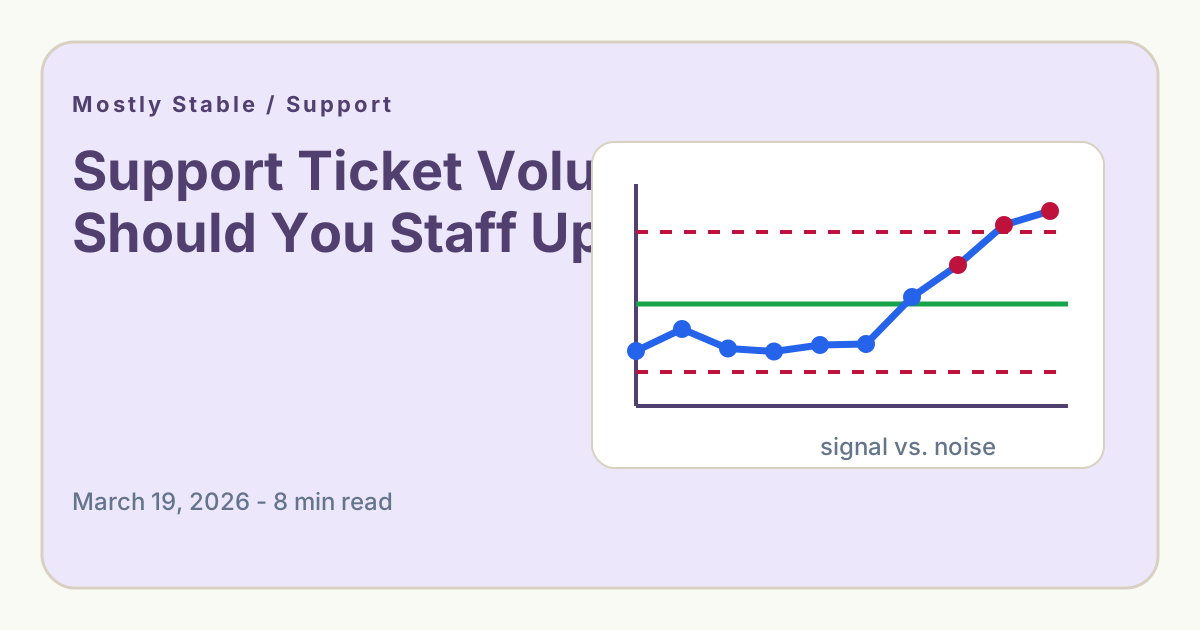
A process behavior chart shows the range of ticket volume your support system has historically produced. If the spike is inside that range, it may be painful but expected. If it is outside, or if several periods run above the old average, demand may have shifted.
That distinction helps avoid two bad moves: hiring for a temporary blip or ignoring a real increase until the team burns out.
Look beyond volume
Volume is only one view. Chart first response time, backlog age, reopen rate, and escalations too. Sometimes volume is stable but the work has become harder. Sometimes volume spikes but response time stays controlled because the queue mix is simple.
A better staffing conversation
Instead of saying, "Tickets are up 18 percent, so we need headcount," say, "Ticket volume has been above the old average for six weeks and first response time is now outside its expected range. The demand system appears to have shifted."
That is a much stronger case. It links the request to process behavior, not just a crowded week.
Volume spikes are not all the same
A support spike from a billing email is different from a support spike from a product outage. A spike from a new enterprise rollout is different from a spike caused by confusing copy. The chart can tell you whether the spike is unusual. The operations context tells you what kind of unusual it might be.
The mistake is treating every spike as a staffing problem. Staffing may be the answer, but it should not be the only answer the team can imagine.
Pair volume with strain metrics
Ticket volume says how much work arrived. It does not say how the system absorbed it. Pair it with backlog age, first response time, resolution time, reopen rate, escalation rate, and agent occupancy.
If volume spikes but strain metrics stay inside normal behavior, the system handled the load. If volume stays normal but backlog age breaks the limit, the work may have become harder. That is a different problem.
How to investigate a real demand signal
- Label tickets by driver: bug, billing, confusion, how-to, account issue, integration, policy.
- Check whether one segment, plan, or channel explains the change.
- Look for product releases, email campaigns, billing cycles, documentation changes, or outages.
- Separate temporary surge work from recurring demand.
A recurring demand signal should feed product, documentation, onboarding, or staffing decisions. A temporary signal needs containment and a note for the next time the same event occurs.
The staffing case gets stronger
When you can show that volume has shifted and strain metrics are breaking behavior limits, the headcount request becomes operational evidence. It is no longer just "the team feels busy."