Startups
Startup Growth Metrics Are Noisy. Act Like It.
Early traction does not arrive as a smooth line. Neither does trouble.
Startups want speed, and rightly so. But speed gets expensive when every metric movement becomes a strategic pivot.
Early growth metrics are especially noisy. Small samples exaggerate movement. One customer can change the graph. A newsletter mention can create a spike. A tracking bug can impersonate traction. A slow sales week can feel like existential feedback from the market.
Do not confuse urgency with evidence
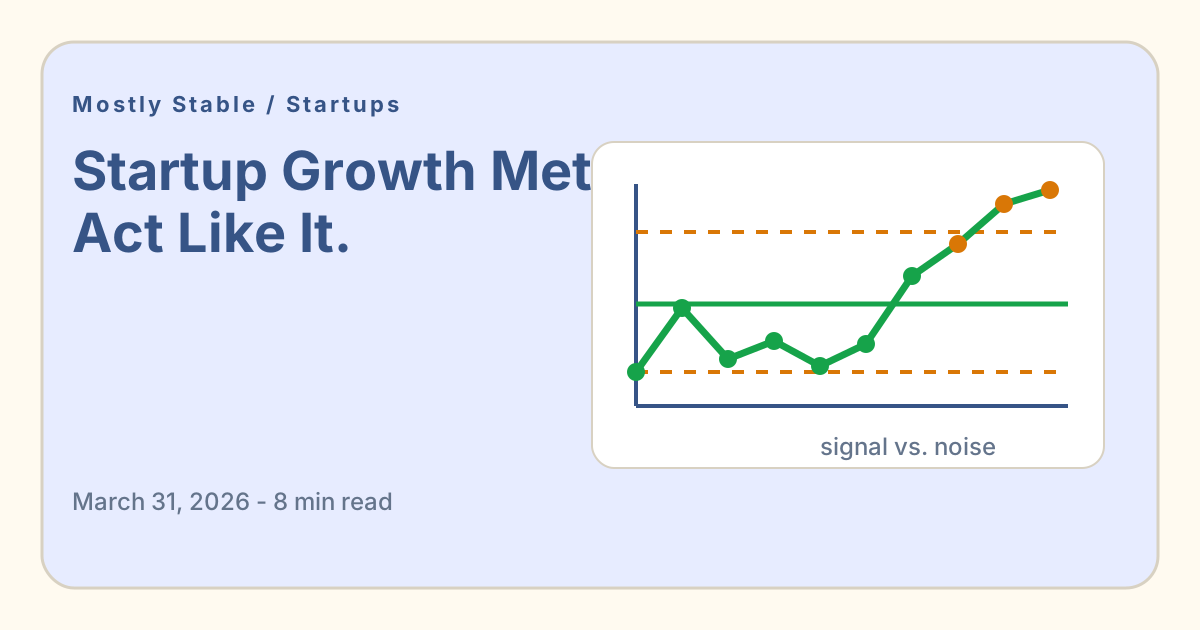
Process behavior charts are useful for startups because they make uncertainty visible. They show what the current system has been producing and whether new data looks meaningfully different.
That helps founders avoid two common mistakes: declaring victory from a short-lived spike and tearing up the plan after a normal dip.
Where to use them first
- Weekly qualified leads
- Activation rate
- Trial-to-paid conversion
- Churn or cancellation requests
- Support tickets per active customer
These are not just numbers. They are outputs of systems: acquisition, onboarding, pricing, product value, and customer experience.
A founder-friendly rule
If the chart shows a signal, slow down enough to learn from it. If the chart shows noise, keep improving the system instead of whipsawing the team.
Startups do not need less ambition. They need fewer false reads.
Small samples make founders hallucinate patterns
When the denominator is small, every user carries too much visual weight. One customer upgrades and expansion looks alive. Two trials fail to activate and onboarding looks broken. A founder can make five strategic stories from ten data points before breakfast.
That is not a character flaw. It is what noisy data does to urgent people.
Use ranges to stay honest
A process behavior chart does not make early data perfect. It makes the uncertainty visible. If weekly qualified leads have been bouncing between 6 and 18, then a week with 14 leads is not a breakout. It is inside the current process. If the next six weeks sit above the old average, that is more interesting.
This kind of discipline keeps the team from overfitting the roadmap to the latest spike or dip.
Investor updates benefit too
Founders often want to show momentum. A process behavior view can make momentum claims more credible. "We are seeing a sustained shift in qualified demos after narrowing the ICP" is stronger than "Demos were up 40 percent last week."
It also helps explain misses without sounding evasive: "This week's pipeline is inside normal range; the issue is that the current range is not enough for our hiring plan."
What to chart early
Chart the few metrics connected to survival and learning. Usually that means demand, activation, retention, revenue quality, and customer pain. Skip vanity numbers unless they influence a decision. A startup does not need a wall of metrics. It needs a few honest ones.