Operations
Set Realistic SLAs From How the Process Actually Behaves
A target is not a plan. It is a promise the process may or may not be able to keep.
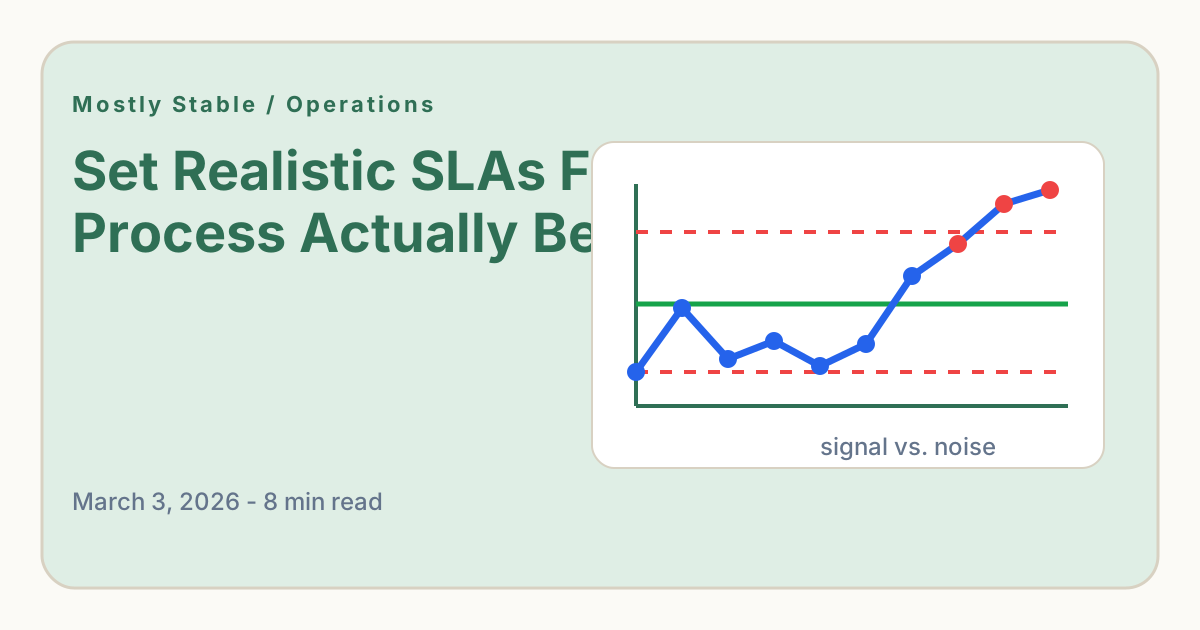
There is a quiet difference between setting a target and understanding whether the process can hit it. Many teams skip that difference. They pick a service level that sounds right, publish it, and then spend the quarter explaining misses.
Process behavior charts make the gap visible. They show the natural range of the metric under the current system. If your response time normally ranges from 18 to 46 hours, a 24-hour SLA is not impossible. It is just not something the current process can reliably deliver.
Capability comes before commitment
When a process is predictable, you can use its behavior limits to understand what future performance is likely to look like if nothing meaningful changes. That is powerful for SLA design because it replaces hope with evidence.
If the expected range already fits inside the customer promise, great. If it does not, the team needs to redesign the system: staffing, routing, automation, queue policies, or demand shaping. Pushing harder on the same process will not make variation disappear.
Targets still matter
Control limits are not goals. They describe the process. Targets describe what customers or the business need. You need both. The useful question is whether the process behavior fits the target.
When it does not, everyone can see the real problem. It is not that the team lacks accountability. It is that the system is not capable yet.
The practical move
Before committing to a new SLA, chart the last 20 to 30 data points. Ask what the system can predictably do today. Then decide whether to change the promise, change the process, or fund the gap.
The difference between a promise and a capability
Customers experience the promise. Teams live inside the capability. Trouble starts when the promise is designed without looking at what the process can actually produce.
A team may promise 24-hour response because competitors do. The current process may produce response times between 14 and 52 hours. That does not mean the team is lazy. It means the process, as built, cannot reliably keep the promise.
Three choices when the process is not capable
- Change the process: add coverage, reduce handoffs, automate routing, improve macros, or remove avoidable demand.
- Change the promise: set a service level the current system can meet while improvement work happens.
- Change the segmentation: offer different service levels by plan, severity, or customer need.
The worst choice is pretending the current process can meet the promise because everyone agreed the promise is important.
How to use behavior limits in planning
Chart the metric that underpins the SLA: first response time, resolution time, uptime, data freshness, queue age, or delivery turnaround. If the process is stable, the limits give a practical view of what future performance may look like unless the system changes.
Then put the target on the same chart. If the target sits inside the normal range, misses will happen regularly. If the target sits outside the normal range in the wrong direction, the team is signing up for chronic failure.
The value of being explicit
Teams often know a promise is unrealistic, but the chart gives them a shared language for saying it. "The current process is stable but not capable of this SLA" is clearer than "We need more resources" and less defensive than "The target is impossible."