Scorecards
Red-Green Scorecards Are Not Enough
A red cell tells you a target was missed. It does not tell you what kind of problem you have.
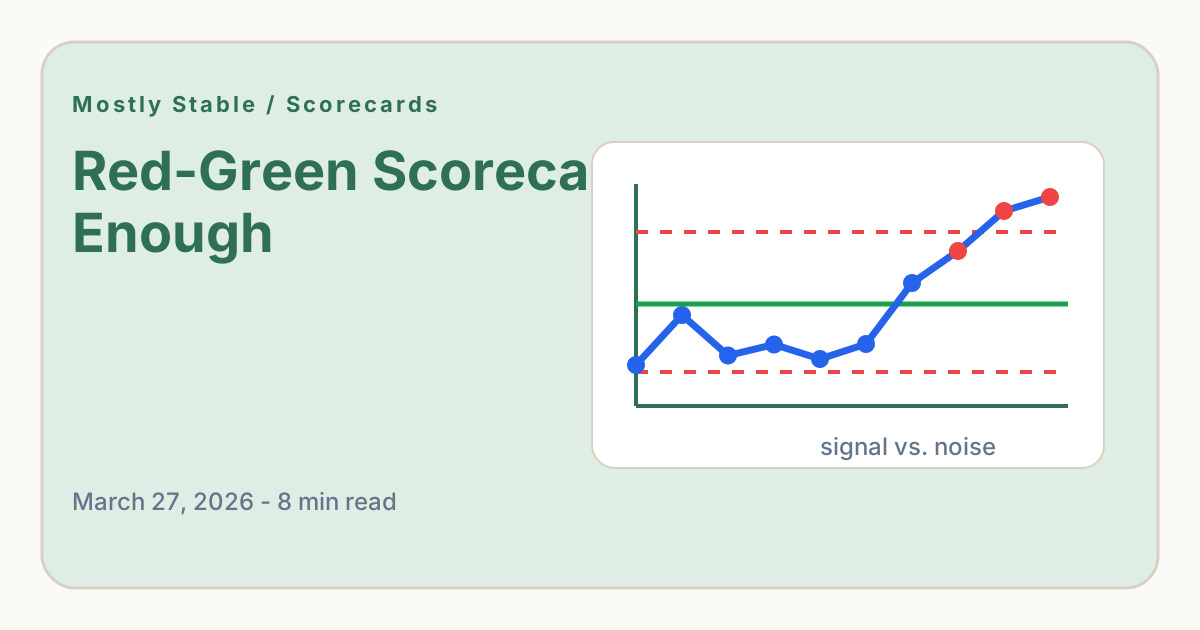
Red-green scorecards are popular because they are fast. Nobody has to squint. Green is good. Red is bad. The meeting moves.
Except the meeting often does not move. Red cells demand explanation. Green cells avoid scrutiny. Yellow cells become a negotiation. The color becomes the story, even when the process has a more important story to tell.
Targets and limits answer different questions
A target says what you want. A process behavior limit says what the system is currently likely to produce. Those are not the same. A metric can miss target and still be behaving normally. A metric can hit target and still show a worrying signal.
This is why red-green scorecards are not enough. They collapse capability and behavior into one color.
The missed target trap
If a metric misses target but stays inside its expected range, asking for a root cause of the miss is usually the wrong move. The root cause is the system's current capability. The answer is redesign, not explanation.
If a metric crosses a behavior limit, now you have a different question: what changed? That may be worth immediate investigation even if the metric is still technically green.
Keep the scorecard, add interpretation
You do not need to throw away the scorecard. Add a process behavior view behind important metrics. Then label each item as routine variation, signal, or capability gap.
The color can start the conversation. It should not be allowed to finish it.
Why color feels so convincing
Status colors are seductive because they reduce complexity. Leaders can scan a page quickly. Teams can see where attention is going. The problem is that color often compresses away the most important distinction: whether the process changed.
A red metric may be chronically red because the target is beyond current capability. A green metric may be green while trending toward trouble. A yellow metric may be normal. The color alone cannot tell the difference.
Add a second label
Keep the color if it helps the organization orient. Add a behavior label next to it:
- Red, stable below target
- Red, signal worse
- Green, stable and capable
- Green, signal improving
- Yellow, routine variation
Those labels are not cosmetic. They tell the room what kind of management response fits.
The wrong response is expensive
If a stable-below-target metric is treated like an incident, the team will spend time explaining a predictable miss. If a signal-worse metric is treated like a normal target miss, the team may miss a real change. If a green-but-improving signal is ignored, the organization may fail to lock in something that worked.
The scorecard should create better questions
A good scorecard does not simply say "good" or "bad." It helps the team ask: did something change, is the process capable, and what action is warranted? Process behavior charts give the scorecard that missing layer.