Product
After a Product Launch, Look for a Signal Before You Tell the Story
Launch week is full of stories. The chart should get a vote.
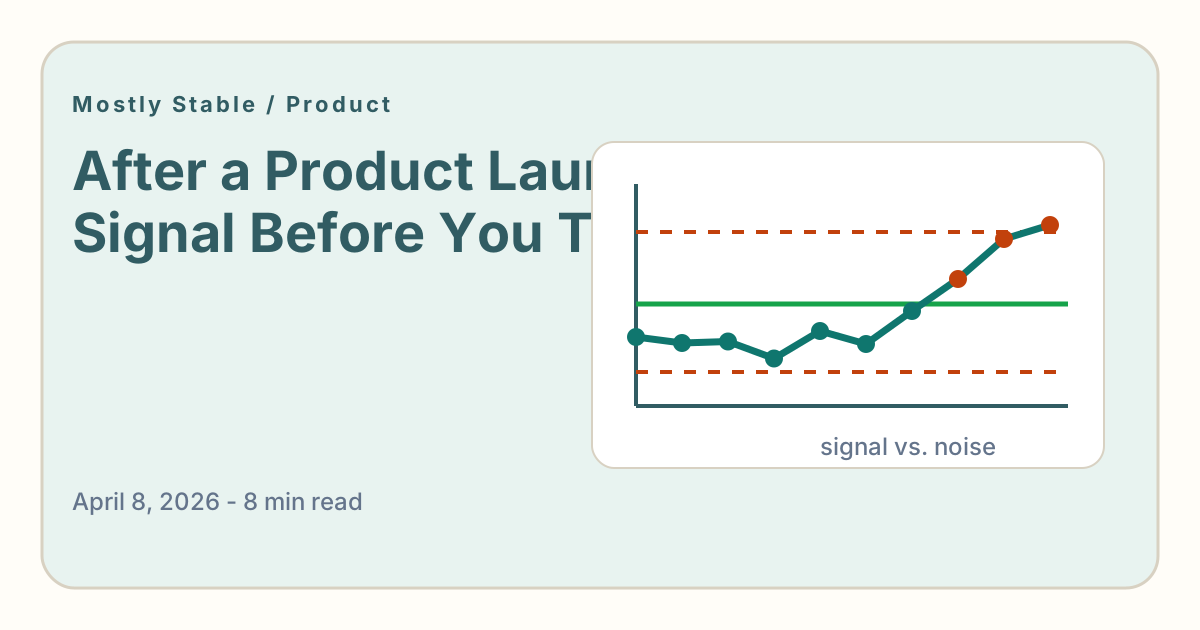
Product launches create narrative gravity. If adoption rises, the story is that the launch worked. If adoption dips, the story is that onboarding failed, messaging missed, or the feature was not valuable enough.
Sometimes the story is true. Sometimes the team is reading normal movement through a launch-shaped lens.
Start with the pre-launch system
Before launch, chart the adoption metric you care about: feature use, activation, repeat use, account expansion, or workflow completion. Learn its normal range. That baseline gives the launch a fair test.
After launch, watch for signals. A single point outside the old limits may matter. A sustained run above the old average may matter. A bouncy week inside the old range probably does not.
What this prevents
It prevents teams from overfitting a story to launch week. It also prevents good launches from being dismissed too early because the first few points were uneven.
Product analytics should help teams learn what changed in user behavior. Process behavior charts make "changed" a more disciplined word.
A better launch readout
Bring the chart to the review. Show the baseline, the launch marker, and the post-launch points. Then say what the chart can and cannot support. The team will still need judgment, qualitative feedback, and segment cuts. But the first read will be less theatrical.
Launch attention can distort the metric
Launches often come with announcements, customer success nudges, sales enablement, onboarding emails, internal excitement, and temporary promotion inside the product. Adoption may rise because the feature is useful. It may also rise because everyone pointed at it for a week.
That does not make the launch a failure. It means the team should distinguish launch attention from durable behavior change.
Mark the intervention clearly
On the chart, mark the date the feature became available and any supporting interventions: email, in-app prompt, sales campaign, pricing change, documentation, or migration. If adoption shifts, those markers help the team understand which changes may have contributed.
Without markers, the team is left with a vague before-and-after story.
Use leading and lagging measures
A launch can move a leading usage metric without improving the outcome that matters. Chart both. For example, feature opens may rise while repeat use stays flat. Setup completion may improve while paid conversion remains unchanged. Support tickets may increase because the new workflow is confusing.
Process behavior charts can be used on each of these metrics. The pattern across them is often more useful than one hero number.
The best launch review has caveats
A credible launch review says what the team knows, what it suspects, and what it cannot claim yet. That is not weak writing. It is product discipline. The chart helps keep those lines clean.