Basics
Process Behavior Charts in Plain English
They are not fancy dashboards. They are a way to stop arguing with normal variation.
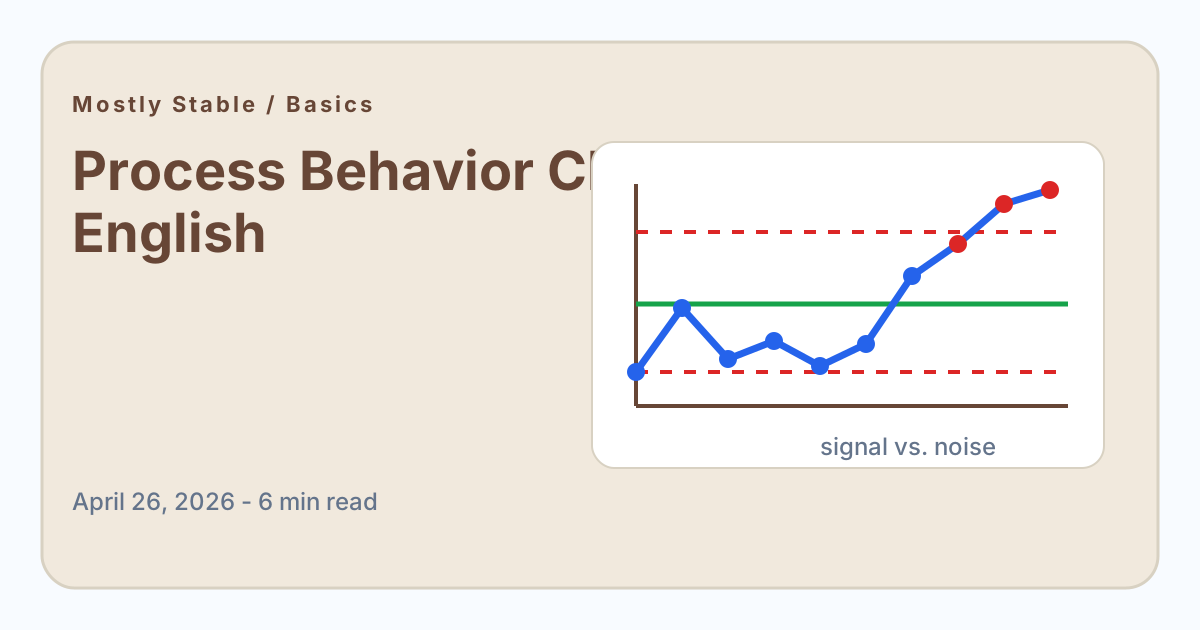
A process behavior chart is a time series chart with a little discipline added.
You plot a metric over time. You add an average. Then you add upper and lower limits calculated from how much the metric usually moves. Those limits show the range the process is likely to produce if nothing important changes.
What the chart tells you
If the points stay inside the limits, the process is behaving predictably. That does not mean the result is good. It means the ups and downs are normal for the current system.
If a point goes outside the limits, or if the points form certain sustained patterns, the chart is telling you the system may have changed. That is when investigation becomes more useful.
Why this helps
Most teams already have charts. What they lack is interpretation. A normal line chart shows movement. A process behavior chart helps classify the movement.
That classification changes decisions. It tells you when to ignore noise, when to investigate a signal, and when to redesign a system that is stable but not good enough.
Where to use one
- Conversion rate over time
- Weekly leads or demos
- Support tickets and response time
- Deployment frequency and lead time
- Revenue, churn, or activation metrics
If the metric is measured repeatedly over time, a process behavior chart can probably help you understand it.