Leadership
The Quiet Link Between Better Charts and No-Blame Culture
A bad chart can make good people look careless. A better chart changes the conversation.
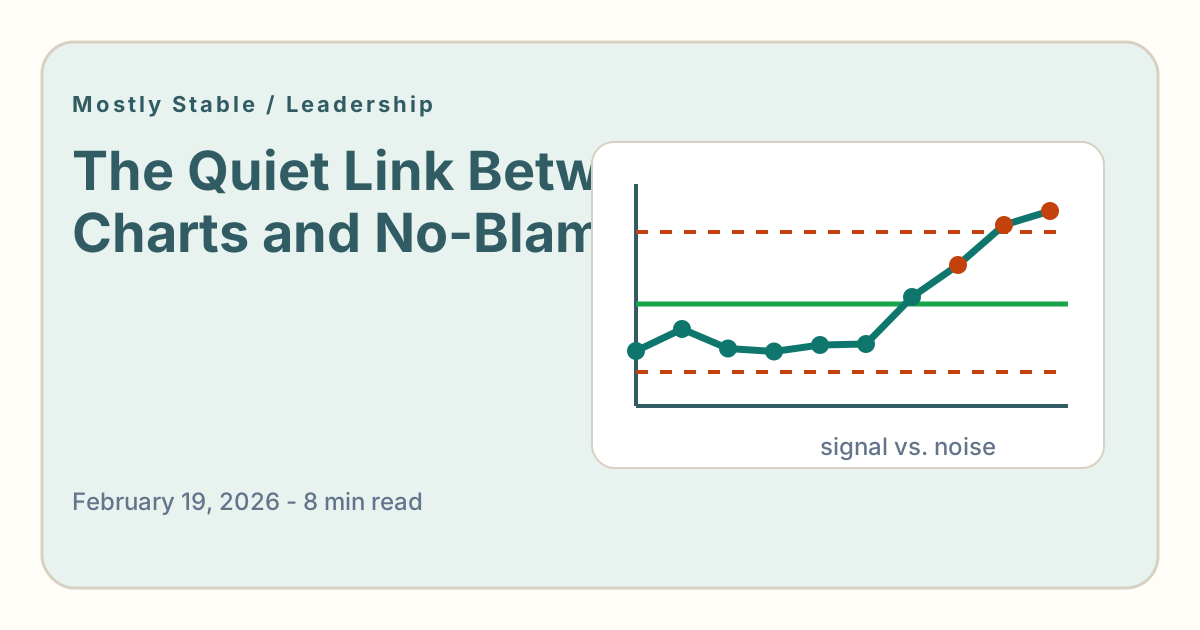
Blame rarely arrives wearing a name tag. It usually arrives as a question. "What happened last week?" "Why were tickets up?" "Why did your region miss?" The tone may be friendly. The effect is still pressure to explain movement that may have been perfectly normal.
When leaders ask people to explain routine variation, two things happen. First, people learn to prepare defensive stories. Second, the organization spends less time improving the system that produced the results.
Normal variation is not personal performance
A support queue can be heavier this week because customer behavior is uneven. A sales cycle can stretch because deal timing is lumpy. A product metric can dip because traffic mix changed slightly. None of that proves someone did something wrong.
Process behavior charts help separate the person from the noise. If the data stays inside the expected range, the chart is saying the system is behaving like itself. That does not mean the result is good. It means pressure on an individual is probably misplaced.
What leaders can say instead
Try replacing "Why was last week bad?" with "Is this a signal or routine variation?" If it is routine, ask, "Is the current system capable of the result we want?" If it is a signal, ask, "What changed in the work, inputs, tools, or environment?"
That language is not softer. It is more precise.
The culture benefit
People will tolerate hard questions when the questions are fair. A process behavior chart makes the fairness visible. It shows when an investigation is warranted and when the right move is to improve the system rather than interrogate the latest point.
No-blame culture is not created by asking everyone to be nicer. It is created by making better distinctions under pressure.
The red bead problem in modern clothes
Deming used the red bead experiment to show how managers can punish people for variation produced by the system. The modern version happens with dashboards. A rep gets asked why their week was down. A support lead gets pressed about a queue spike. A product team gets challenged because activation dipped after a release.
The chart looks modern. The management mistake is old.
Fairness depends on knowing what kind of variation you are seeing
If a process is stable, the people in it can still produce different outcomes from week to week. That does not mean they changed effort, judgment, or quality. It means the system has variation. Asking for a personal explanation of every result teaches people to protect themselves rather than improve the work.
If there is a signal, the question changes. A signal may point to a change in inputs, workflow, tooling, staffing, customer mix, or policy. The goal is still not blame. The goal is learning what changed so the organization can respond.
A better one-on-one conversation
Suppose a manager sees that an account manager's renewal calls dropped last week. Instead of opening with "What happened?" the manager can first ask whether the drop is outside that person's normal range. If it is routine, the conversation can focus on the system: territory load, call quality, pipeline health, or administrative burden.
If it is a signal, the conversation can be specific: "This week is outside your usual pattern. Did something change in your accounts, schedule, tools, or priorities?" That is a fairer and more useful question.
The trust dividend
When teams see leaders distinguish signal from noise, they become more willing to surface real problems. They know the response will not be a reflexive blame session. That trust is not sentimental. It is operational leverage.