Strategy
KPI Theater vs. Decision-Grade Metrics
A metric can look important and still fail the only test that matters: does it improve the decision?
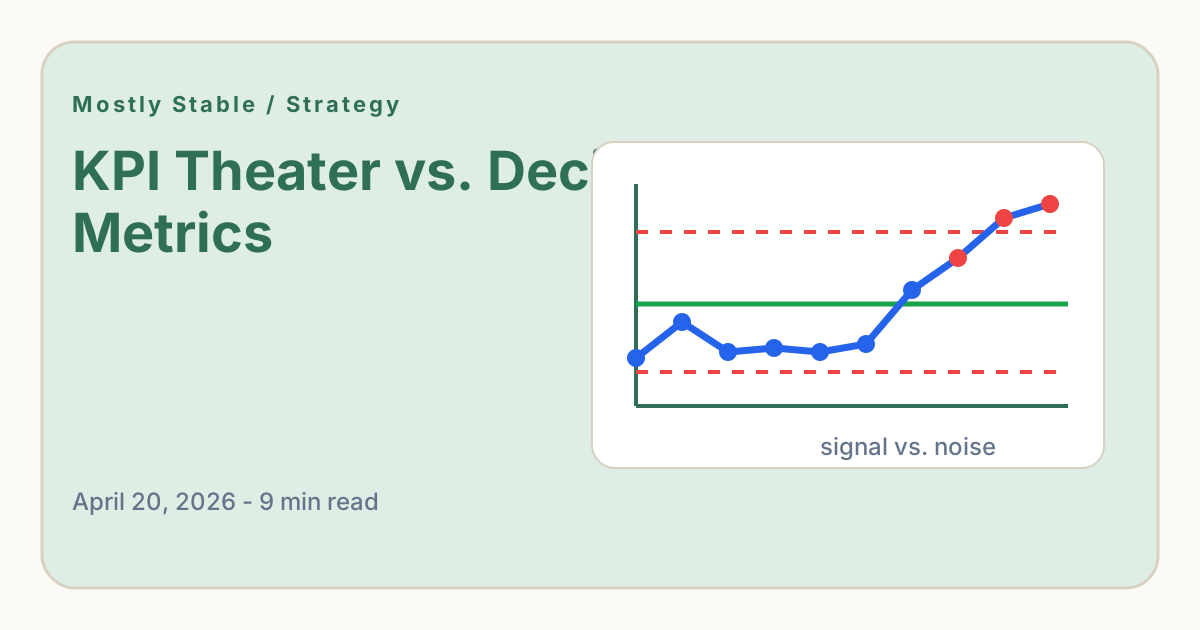
KPI theater is what happens when metrics are used to create the feeling of control. The dashboard is polished. The numbers are current. The status colors are familiar. Yet the same bottlenecks survive quarter after quarter.
The problem is not that the company lacks metrics. It is that the metrics do not guide action and learning.
Decision-grade metrics have context
A decision-grade metric answers more than "What is the number?" It helps answer: compared to what, over what time, produced by which system, with what action rule?
Process behavior charts add one missing piece of context: whether the metric is showing routine variation or meaningful change. That context keeps teams from treating every movement as evidence.
The KPI theater smell test
- Do people explain red numbers without changing the system?
- Do green numbers avoid scrutiny even when customers are unhappy?
- Do teams celebrate isolated spikes as progress?
- Do dashboards create more meetings than decisions?
If yes, the metric system may be performing for the room rather than improving the work.
What to build instead
Pick fewer metrics. Tie each one to a decision. Show how it behaves over time. Separate targets from natural limits. Write down what action a signal should trigger.
That is less theatrical. It is also far more useful.
Decision-grade does not mean complicated
A decision-grade metric can be simple. The difference is that it comes with enough context to support action. A weekly lead count can be decision-grade if the team knows the baseline, the normal range, the target, the owner, and the action rule. A sophisticated dashboard can still be theater if nobody knows what to do with it.
The minimum context package
- Definition: what exactly counts and what does not.
- Owner: who owns the system behind the metric, not just the report.
- Behavior: what range is normal for the current process.
- Target: what the business or customer needs.
- Action rule: what happens when there is a signal or capability gap.
Without those pieces, the organization is often just admiring numbers.
How theater survives
KPI theater survives because it feels responsible. People are reviewing numbers. Slides are updated. Owners are named. But if the ritual does not change decisions, improve systems, or reveal constraints, it is not management. It is reporting.
Where process behavior charts help most
They are especially useful for metrics that are reviewed often, create anxiety, and have enough historical data to show a pattern. Those are the metrics most likely to create theater when interpretation is missing.
The goal is not to make every KPI statistical. The goal is to make important recurring decisions less performative and more grounded.