Dashboards
5 Dashboard Traps That Create Busywork
A dashboard can be beautiful and still make the team worse at deciding.
Dashboards are supposed to reduce confusion. Some do. Many just package confusion in cleaner colors.
If your dashboard creates more follow-up meetings than decisions, look for these five traps.
1. Red and green without behavior
Red and green status can be useful when a target has real operational meaning. It becomes harmful when every threshold miss triggers explanation. A metric can be red and still be behaving normally for the current system.
2. Two-period comparisons
Month-over-month and week-over-week comparisons are easy to read. They are also easy to overread. Two points do not show the system. Use time-ordered data before deciding what changed.
3. Trend lines that invite bedtime stories
A linear trend line can make ordinary variation look like destiny. It is mathematically tidy but often operationally misleading. Ask whether the process shifted, not whether a line slopes nicely.
4. Alerts without action rules
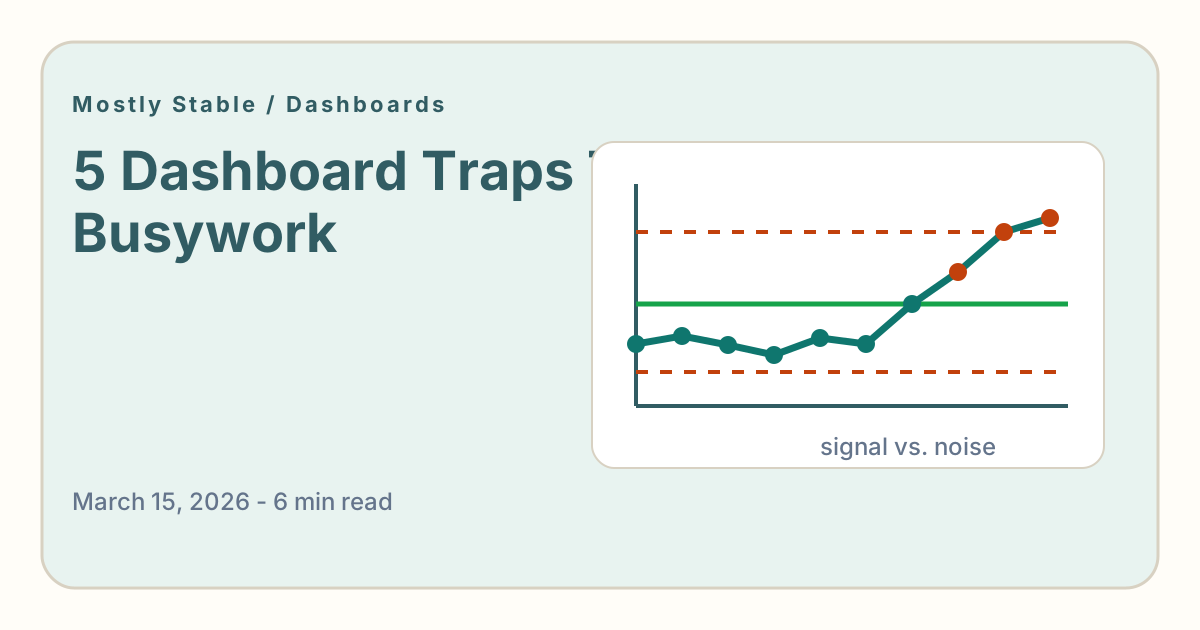
If nobody knows what action an alert should trigger, the alert is not governance. It is noise. Process behavior charts help define action rules around signals rather than arbitrary wiggles.
5. Metrics with no owner for the system
Someone may own reporting the number, but nobody owns the system that produces it. That creates a ritual where people explain results they cannot change. A better review connects each metric to the process, decision, and improvement lever behind it.
The fix is not fewer dashboards by default. It is dashboards that distinguish normal movement from real change. That is where process behavior charts earn their place.