Customer Ops
Customer Ops Response Time Is a System, Not a Mood
A slow day can feel personal. Most of the time, it is structural.
Response time is emotionally loaded. Customers feel it. Agents feel it. Managers feel it when the weekly report shows a miss.
That emotional weight makes the metric easy to misuse. One slow day becomes a coaching moment. One good day becomes proof that the team can always do better. Neither conclusion may be fair.
Chart the system
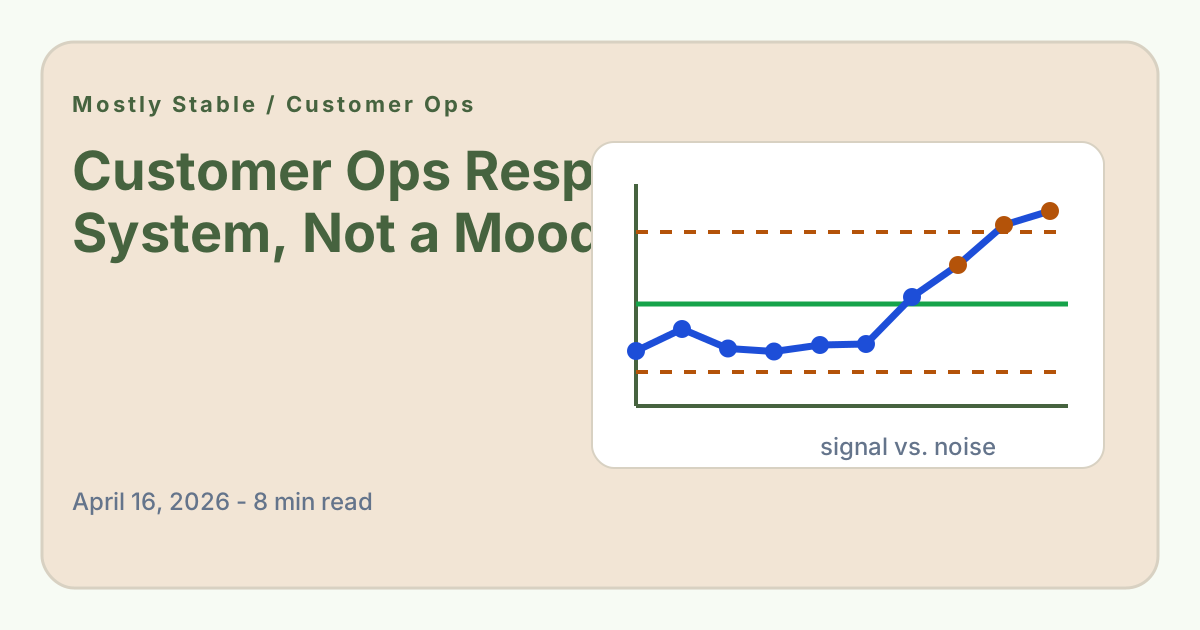
Response time comes from a system: arrival rate, staffing, ticket complexity, routing, macros, tooling, interruptions, and escalation rules. A process behavior chart shows what that system predictably produces.
If response time stays inside the expected range, the current process is behaving normally. If that normal range violates the customer promise, the team has a capability problem. It needs system changes, not more reminders.
Signals deserve attention
If response time breaks the upper limit, that is different. Now ask what changed. Did a queue get rerouted? Did a release trigger confusion? Did staffing drop? Did one customer segment create unusual volume?
The chart helps the team choose the right mode: improve the system, investigate a signal, or reset the promise.
Better language for the metric
Instead of saying, "The team was slow this week," say, "The response-time system produced a signal this week," or, "The system is stable but not capable of the SLA." That language may sound small. It changes where people look for answers.
Average response time can hide the queue people feel
Averages are useful, but customer ops teams should be careful with them. The average can improve while a long tail gets worse. A few very fast responses can mask a group of customers waiting too long. Process behavior charts work best when paired with thoughtful metric choice.
Chart median response time, 90th percentile response time, backlog age, and SLA miss rate where possible. Each tells a different part of the operating story.
Use the chart to separate coaching from system design
If one agent's response time is outside their usual range, coaching or investigation may be appropriate. If the whole team's response-time process is stable but above target, coaching individual agents will not solve the core issue. The system needs redesign.
That distinction can prevent a lot of unfair management.
What system changes might move the range
- Better routing by issue type or customer tier.
- Fewer handoffs between support, success, and engineering.
- Clearer macros and internal knowledge-base articles.
- Staffing aligned to arrival patterns, not averages.
- Product fixes for the issues creating avoidable demand.
The chart will not choose the fix. It will show whether the fix changed the behavior.
Customer language matters
Customers do not care that the process is statistically stable. They care whether their problem was handled in a reasonable time. Use process behavior internally to build a system that can keep the promise externally.